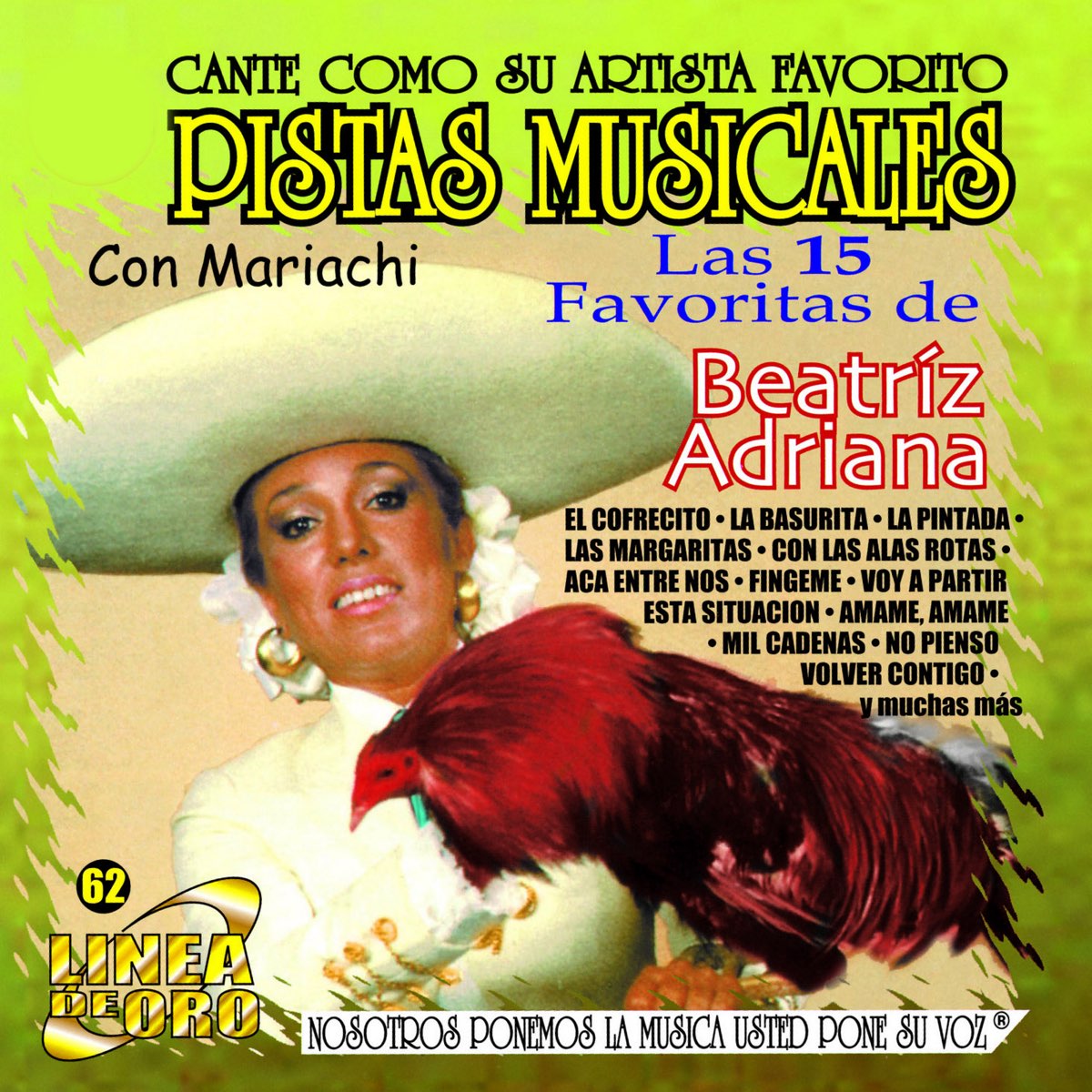
If you’ve ever sat in a Mexican plaza at dusk, you’ve heard it. That sharp, trilling cry—"¡Ora pues!"—before a mariachi band launches into a melody that feels both lonely and defiant. That is the signature of Beatriz Adriana. And for most fans, the conversation about her begins and ends with one song: La Basurita.
It’s a weird title if you think about it. "The Little Piece of Trash."
In a world of flashy pop anthems about wealth and glamorous love, Beatriz Adriana took a song about being a "little feather" blown by the wind and turned it into a cultural powerhouse. Honestly, it shouldn't have worked. It’s a song about having absolutely nothing, not even enough water to be baptized as a child. Yet, decades later, it’s the track that gets everyone to put down their drink and sing along.
The Meaning Behind the Lyrics of La Basurita
Most people think Beatriz Adriana La Basurita is just a sad song. They’re wrong.
It’s actually a song about survival. Written by the legendary composer Juan Záizar, the lyrics paint a picture of someone wandering through a desert, looking for the east but finding only darkness. It’s bleak. There’s no sugar-coating it.
"Soy una plumita, soy basurita que lleva el aire."
(I am a little feather, I am a little piece of trash carried by the wind.)
When Beatriz Adriana sings those lines, she isn't asking for your pity. She’s stating a fact of life for a lot of people. The "basurita" isn't literal garbage; it's a metaphor for being at the mercy of fate. You’re small. The world is big. The wind blows you wherever it wants.
There’s a specific line that always gets people: "Faltó hasta el agua para bautizarme." It suggests a level of poverty so deep that even the basic rituals of belonging were out of reach. It’s a gut-punch.
Why Beatriz Adriana Was the Only One Who Could Sing It
Could someone else have made this a hit? Maybe. But they wouldn't have made it an icon.
Beatriz Adriana Flores de Saracho, born in Navojoa, Sonora, didn't just sing rancheras—she lived them. By the time she was 15, she was already acting alongside La India María in La Comadrita. She had this raw, unpolished energy. She wasn’t trying to be a polished "Diva" in the European sense. She was a Ranchera through and through.
Her voice has this specific "grit." When she hits the high notes in La Basurita, it doesn't sound like a trained opera singer. It sounds like a woman who has seen some things. And she had.
Her life wasn't exactly a fairytale:
- She was the first wife of Marco Antonio Solís (El Buki), a marriage that ended in a very public 1987 divorce.
- She faced the unthinkable tragedy of her son, Leonardo Martínez, being murdered by kidnappers in 2000.
- She eventually had to move to the United States to protect her daughter, Beatriz Solís.
When you hear her sing about being a "little feather" tossed around by life, you know she’s not faking it. That’s why the song stays relevant. It’s authentic. People can smell a fake a mile away, and Beatriz Adriana is anything but.
The Cultural Impact: From 1980s Radio to TikTok
You might think a song released decades ago would be buried in the "oldies" bin. Not this one.
As of early 2026, Beatriz Adriana La Basurita is still pulling massive numbers on streaming platforms. We’re talking nearly 200,000 streams a week on Spotify alone for a track that’s over 30 years old. That’s wild. It’s consistently featured on "Las Rancheras de Papá" and "Reinas del Mariachi" playlists.
But it’s also found a new life with younger generations. Angela Aguilar, the current princess of Mexican music, has performed it. Beatriz González has a popular version. Even on TikTok and YouTube, you’ll find mariachi violinists teaching the song to students in Southern California.
It has become a "standard." It’s the "Yesterday" or "I Will Always Love You" of the mariachi world. If you call yourself a female ranchera singer and you don’t know how to sing La Basurita, you’re basically not in the club.
What Most People Get Wrong About the Song
A common misconception is that Beatriz Adriana wrote it. She didn't.
As mentioned, Juan Záizar is the pen behind the pain. He was a master of the canción ranchera, and he knew how to write for the Mexican soul. However, Beatriz Adriana’s interpretation is so definitive that many people naturally assume it’s her autobiography.
Another mistake? Thinking it’s a "defeated" song.
Watch a video of her performing it at Plaza México in Los Angeles. She’s wearing a massive, ornate dress. She’s smiling. She shouts "¡Ora pues!" with enough lung power to shake the rafters. The song is about being small, but the performance is about being unbreakable.
How to Appreciate the Song Like an Expert
If you want to really "get" why this song is a masterpiece, stop listening to it as background music.
- Listen to the Grito: The opening "Ora pues" isn't just a catchphrase. It’s an announcement. It’s her saying, "I’m here, and you’re going to listen."
- Focus on the Violin: The mariachi arrangement for this song is notoriously tricky for violinists. It requires a lot of "soul" in the vibrato.
- Watch the 2023/2024 "Plaza México" Version: She recently gave "new life" to the song with high-definition music videos. Even in her 60s, her voice has that same fire.
Actionable Next Steps for Fans
If you're looking to dive deeper into the world of Beatriz Adriana beyond just this one hit, here is how you should navigate her discography:
- Listen to "Hasta Cuando": This is her other massive hit. If La Basurita is about fate, Hasta Cuando is about the exhaustion of a bad relationship.
- Check out the album "Arrepentida y Sola": This 1984 vinyl is considered a classic. It captures her at the height of her vocal prowess.
- Follow her daughter, Beatriz Solís: If you want to see the legacy continue, her daughter is a talented singer in her own right and often honors her mother’s work.
- Look for her biographical book: Beatriz Adriana has been working on her memoirs, which are expected to cover the "hidden" side of the Mexican music industry and her high-profile relationships.
The beauty of Beatriz Adriana La Basurita is that it doesn't age. As long as people feel small in a big world, as long as there are deserts to cross and winds that blow us off course, this song is going to matter. It’s not just a track on a playlist; it’s a piece of history that you can sing at the top of your lungs when life gets a little too heavy.
To truly experience the power of the song, find a live recording from the late 80s. The raw emotion in her voice during that era, shortly after her split from Marco Antonio Solís, adds a layer of reality that you just can't manufacture in a studio.