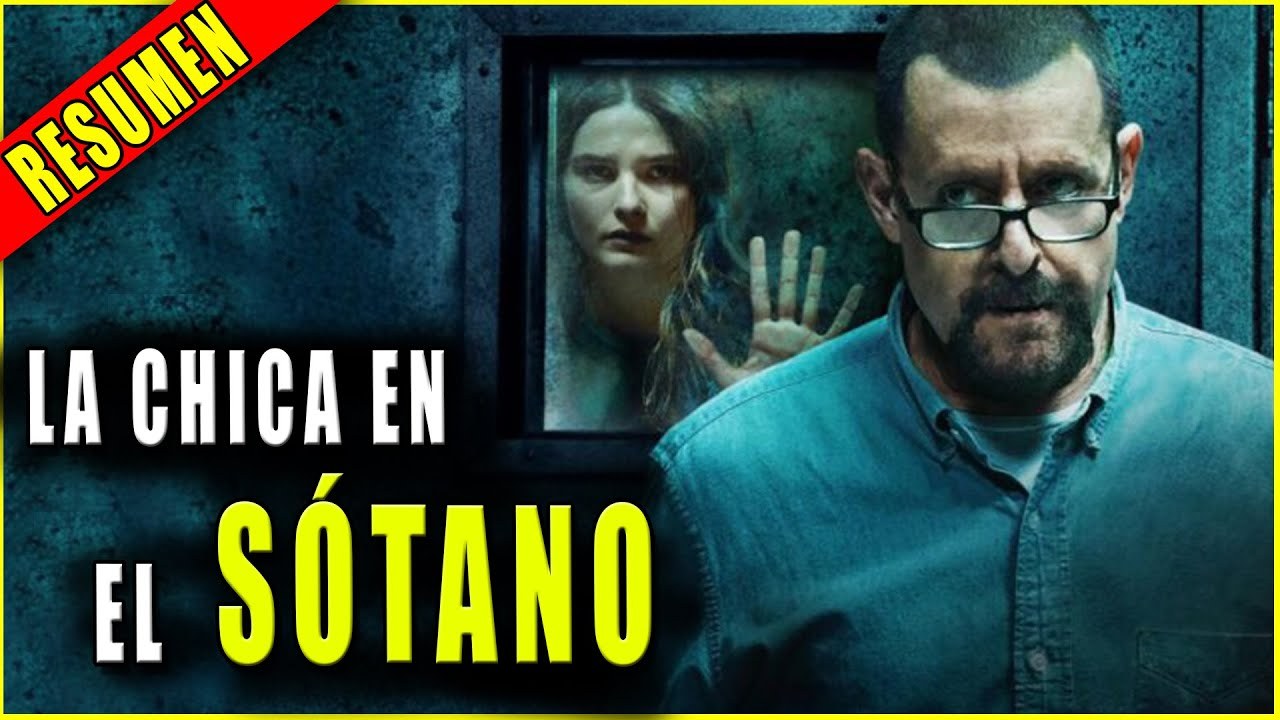
You’ve probably seen the movie Girl in the Basement on Lifetime or caught a true-crime TikTok about it. It’s one of those stories that feels too twisted to be real. But the "chica del sótano" is more than just a piece of fiction or a dramatized script. It's a real, breathing tragedy that happened in Amstetten, Austria. We're talking about Elisabeth Fritzl.
For twenty-four years, she lived in a windowless bunker. No sunlight. No fresh air. Just a heavy concrete door and a father who had turned into her captor.
Honestly, when people talk about la chica del sótano, they often focus on the shock value. They want the gore. They want the "how could he do it?" details. But if you actually look at the case files from the 2008 discovery, the reality is way more complex and, frankly, much more devastating than any movie can portray. It wasn't just a crime; it was a decades-long failure of a community and a legal system to see what was happening right under their feet.
The Real Story Behind the Chica del Sótano
Let’s get one thing straight: Elisabeth Fritzl wasn't some runaway.
In August 1984, Josef Fritzl lured his eighteen-year-old daughter into the basement of their family home. He told her he needed help carrying a door. That was the last time she’d be "free" for nearly a quarter of a century. He drugged her. He handcuffed her. He locked her away.
Think about that for a second. Twenty-four years.
To the rest of the world, Elisabeth had joined a cult. That’s the lie Josef fed everyone. He even made her write letters to "prove" she was okay and didn't want to be found. And the wild part? People believed it. The police, the neighbors, even her own mother, Rosemarie, who lived in the floors above the dungeon, supposedly had no clue.
The Logistics of a Secret Life
How do you hide a whole family in a basement?
Josef Fritzl was an engineer. He knew how to build things. Over the years, he expanded the cellar into a series of small, cramped rooms. It had a kitchen, a bathroom, and even a television. But it was also a place of unspeakable abuse. Elisabeth gave birth to seven children in that hole.
- Three stayed in the basement with her.
- Three were "found" on the doorstep as infants and raised by Josef and Rosemarie upstairs.
- One died shortly after birth.
This is where the story of la chica del sótano gets even weirder. Josef would bring the "abandoned" babies upstairs and claim Elisabeth had left them there with a note. Social workers actually visited the house. They checked on these kids. They looked into the eyes of a man who was keeping their mother prisoner feet below them and saw a "doting grandfather."
It makes you realize how easily people see what they want to see.
Why the Movie "Girl in the Basement" Changed Things
When the film Girl in the Basement dropped in 2021, it reignited the internet's obsession. But there are some big differences. The movie moves the setting to the United States. It changes the names (Elisabeth becomes Sara).
Critics and survivors often point out that these dramatizations can be a double-edged sword. On one hand, they bring awareness. On the other, they can feel exploitative. If you're looking for the truth about the chica del sótano, the movie is a Hollywood lens. The real Elisabeth never had a boyfriend named Chris who was looking for her. She was alone.
The Breaking Point: How She Escaped
It wasn't a daring escape. It wasn't a cinematic breakout. It was a medical emergency.
In April 2008, Elisabeth's eldest daughter, Kerstin, became unconscious. She was dying. Elisabeth begged and pleaded until Josef finally agreed to take the girl to the hospital. But Kerstin was in such bad shape that the doctors were suspicious. They needed to talk to her mother. They needed a medical history.
Josef, thinking he could control the narrative one last time, let Elisabeth out. He told her to tell the hospital she had just returned from her cult.
But the moment she was away from the house, she told the police everything.
The image of Elisabeth emerging into the light is something that stuck with the Austrian public for years. She looked decades older than she was. Her skin was translucent. She was a ghost of the girl who had disappeared in 1984.
Life After the Bunker
What happens to the chica del sótano after the cameras turn off?
That’s the part most people forget. Elisabeth and her children were given new identities. They live in an undisclosed location in Austria, often referred to as "Village X" in media reports. They have a house with a huge fence. No basements. They spend their time trying to heal.
It’s been reported by journalists like Allan Hall, who wrote Monster, that the children struggled with basic things. Light. Space. The youngest boy, who had never seen the sun, supposedly spent months fascinated by the way wind moved the grass.
It's a reminder that survival isn't just about staying alive; it's about learning how to be a person again.
The Psychology of the Captor
Josef Fritzl is currently serving a life sentence. He’s in his late eighties now.
Psychiatrists who interviewed him, like Dr. Adelheid Kastner, described a man with a "profoundly disturbed" need for power. He didn't see his daughter as a human. He saw her as a possession. This is a common thread in "dark cellar" cases, similar to the Natascha Kampusch case or the Ariel Castro kidnappings.
These men aren't just "monsters" in a fairy tale sense. They are often mundane, boring, and highly controlled individuals who blend into society perfectly. That’s the scariest part.
Understanding the Legal and Social Failures
Why didn't anyone hear the screaming?
The walls were reinforced. The door was an electronic masterpiece that only Josef could open. But the real barrier was psychological. In post-war Austria, there was a culture of "mind your own business." People didn't ask questions about what the neighbor was doing in his shed.
The social services also failed. They accepted the "cult" story without ever verifying Elisabeth's whereabouts. They allowed Josef to adopt the three children he brought upstairs without a thorough investigation into the biological mother's disappearance.
How to Support Survivors Today
When we consume content about la chica del sótano, we have a responsibility to look past the entertainment factor. True crime isn't just a genre; it's someone's life.
If this story moves you, the best thing you can do is support organizations that actually help people in these situations. Groups like the National Center for Missing & Exploited Children or local domestic violence shelters do the heavy lifting that prevents these stories from happening.
Actionable Steps for the Informed Reader:
- Educate Yourself on Grooming Signs: Often, these cases start with manipulation long before the physical kidnapping. Learn the red flags of coercive control.
- Support Victim Privacy: If you ever come across "leaked" photos or "where are they now" videos that seem invasive, don't click. Giving survivors space is the greatest gift a public can offer.
- Question the Narrative: When watching movies like Girl in the Basement, cross-reference with actual court transcripts or reputable journalistic books like The Crimes of Josef Fritzl by Stephanie Marsh.
- Report Suspicious Activity: It sounds cliché, but the "see something, say something" rule matters. In many of these cases, neighbors later said they "thought something was off" but didn't want to cause trouble.
The story of the chica del sótano isn't just a horror story. It is a testament to Elisabeth Fritzl's incredible will to survive and protect her children under the most impossible circumstances. She is not a victim anymore; she's a woman who reclaimed her life.
Key Takeaways for Future Reference:
- The case was discovered in 2008 in Amstetten, Austria.
- Elisabeth Fritzl was held for 24 years by her father.
- The film Girl in the Basement is a fictionalized version of these real events.
- The family now lives under protected identities to ensure their privacy and safety.
By focusing on the facts and the human element, we move away from sensationalism and toward a better understanding of how to protect the vulnerable in our own communities.