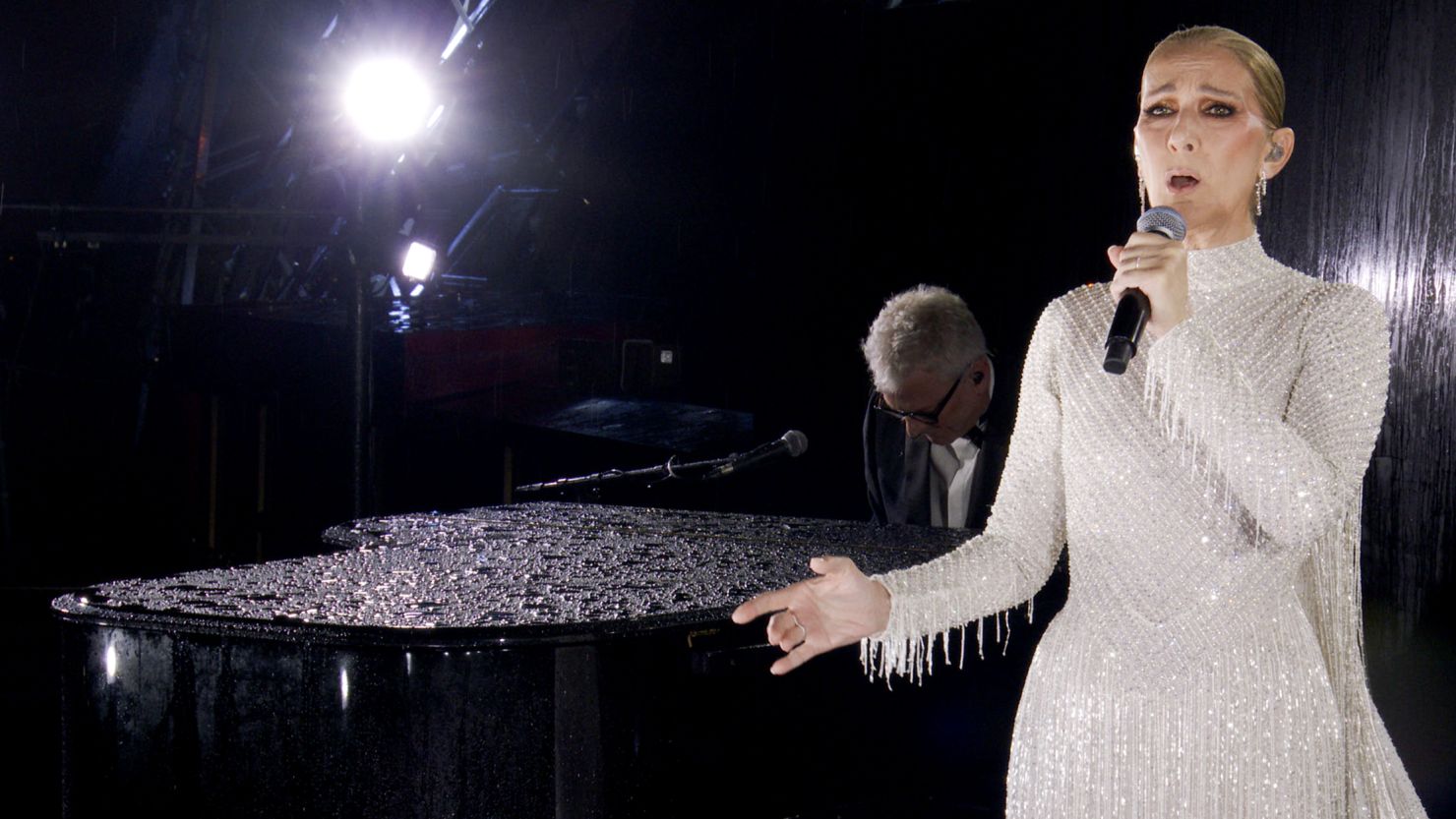
Honestly, if you didn’t have a lump in your throat watching the Eiffel Tower light up while that voice soared over Paris, are you even human? It was the comeback of the century. After years of silence and a diagnosis that would have broken anyone else, Celine Dion didn't just sing; she reclaimed her life.
The celine dion olympic song wasn't some new pop hit or a flashy dance track. It was "Hymne à l’amour," a classic French masterpiece originally made famous by the legendary Edith Piaf. Choosing this specific song was a massive statement. It’s a song about love that transcends death, and for Celine, it was a song about a career that many thought was over.
But why did it hit so hard? To understand the weight of that moment, you have to look at what was happening behind the scenes.
The Comeback Nobody Thought Was Possible
Celine Dion had been basically missing in action since 2022. That’s when she went public with her diagnosis of Stiff Person Syndrome (SPS). It’s a rare, brutal neurological disorder. Think about it: a singer whose entire life is built on precision and vocal control suddenly losing the ability to command her own muscles.
She described the sensation like "somebody is strangling you." It wasn't just about not being able to reach the high notes; it was about the physical pain of her body locking up. For two years, the world wondered if she would ever perform again.
Then came Paris 2024.
The rumors were everywhere. People spotted her at the Royal Monceau hotel. They saw her waving to fans. But nobody knew for sure if she could actually do it. When she finally appeared on the first floor of the Eiffel Tower, the rain was pouring down, the Olympic rings were glowing, and she looked like a goddess in a white beaded Dior gown.
The first few notes of the celine dion olympic song were delicate. Then, she let loose. The power was still there. That crystalline tone that has defined her career for forty years hadn't gone anywhere. It was a "vocal athlete" at the top of her game, as Kelly Clarkson put it through tears on the live broadcast.
Why "Hymne à l'amour" Was the Perfect Choice
You've got to appreciate the layers here. Edith Piaf wrote "Hymne à l’amour" (Hymn to Love) for the love of her life, Marcel Cerdan. He was a French boxer, a world champion. He died in a plane crash in 1949 while traveling to see her.
Piaf was devastated.
The song is a promise: "If you die, far from me, if you’re gone... I will die too." It’s heavy stuff. By choosing this as the celine dion olympic song, she was nodding to French history, to the spirit of the Olympic athletes, and to her own late husband, René Angélil.
- The Connection to Athletes: Piaf’s lover was a sportsman. Celine sang about the sacrifice and determination that defines the Olympic spirit.
- The French Heritage: As a French-Canadian, Celine has always been a bridge between North America and Europe. This was a homecoming.
- The Emotional Weight: The lyrics talk about the sky falling and the earth crumbling, but love remaining. After her health battles, those words felt literal.
A Tale of Two Olympics: Atlanta vs. Paris
This wasn't Celine's first rodeo. If you’re old enough to remember the 1996 Atlanta Games, you might recall a very different vibe. Back then, she performed "The Power of the Dream."
That was peak 90s power ballad territory.
In Atlanta, she was 28 years old, at the absolute height of her fame, and "My Heart Will Go On" hadn't even happened yet. She stood on a massive stage, backed by a choir and a full orchestra. It was grand, polished, and safe.
Fast forward 28 years to Paris.
The celine dion olympic song in 2024 was raw. It was stripped back. There was just a piano and her voice. The setting—high above the city, exposed to the elements—mirrored her own vulnerability. In 1996, she was a superstar showing off. In 2024, she was a survivor proving she was still here.
What Most People Missed About the Performance
There was some chatter online, as there always is, about whether the performance was live or pre-recorded. In the industry, "live-to-tape" is common for huge outdoor events like the Olympics because of the technical risks.
But honestly? Does it even matter?
The technical reality of Stiff Person Syndrome is that spasms can be triggered by anything: cold, stress, loud noises. Celine was standing in the rain, on a metal tower, with the eyes of the world on her. The fact that she was there at all is the miracle.
Her medical team, including Dr. Amanda Piquet, has spoken about the grueling "full-time job" of her rehabilitation. Five days a week of vocal therapy, physical therapy, and medication. The Paris performance wasn't just a 4-minute song; it was the result of thousands of hours of agonizing work.
The Impact on the Charts
Almost immediately after the ceremony, the celine dion olympic song went viral.
- Streams of "Hymne à l’amour" spiked globally.
- Search interest for Stiff Person Syndrome hit an all-time high.
- A live recording of the performance was officially released on streaming platforms on October 10, 2024—the 61st anniversary of Edith Piaf's death.
It’s rare for a performance to have that kind of cultural staying power months and years later. It wasn't just a "moment"; it was a shift in how we see her. She's no longer just the lady who sang the Titanic song. She’s an icon of resilience.
What’s Next for Celine in 2026?
As of early 2026, the question on everyone's mind is: will she tour again?
The short answer is: we don't know, and she probably doesn't either. But the Paris Olympics changed the conversation. Before that night, the narrative was about her retirement. Now, the narrative is about her recovery.
She has been open about wanting to do a Las Vegas residency again. She misses the stage. She misses the "human" connection. But she’s also realistic. She lives "one day at a time" now.
If you want to keep supporting her journey, here are a few things you can actually do:
- Watch the Documentary: If you haven't seen I Am: Celine Dion, go watch it. It’s not a shiny PR piece. It shows the actual spasms. It shows her without makeup, struggling to speak. It makes the Olympic performance look even more impressive.
- Listen to the Live Version: The "Live aux Jeux Olympiques de Paris 2024" version of the song is available on Spotify and Apple Music. The proceeds and views help keep her legacy at the forefront.
- Follow the SPS Research: Celine has become the face of Stiff Person Syndrome. Organizations like the Stiff Person Syndrome Research Foundation are doing incredible work to find a cure.
Celine Dion didn't just give us a song in Paris. She gave us a reason to believe that even when your body says "no," your spirit can still say "yes." And that’s a hell of a lot more important than a gold medal.