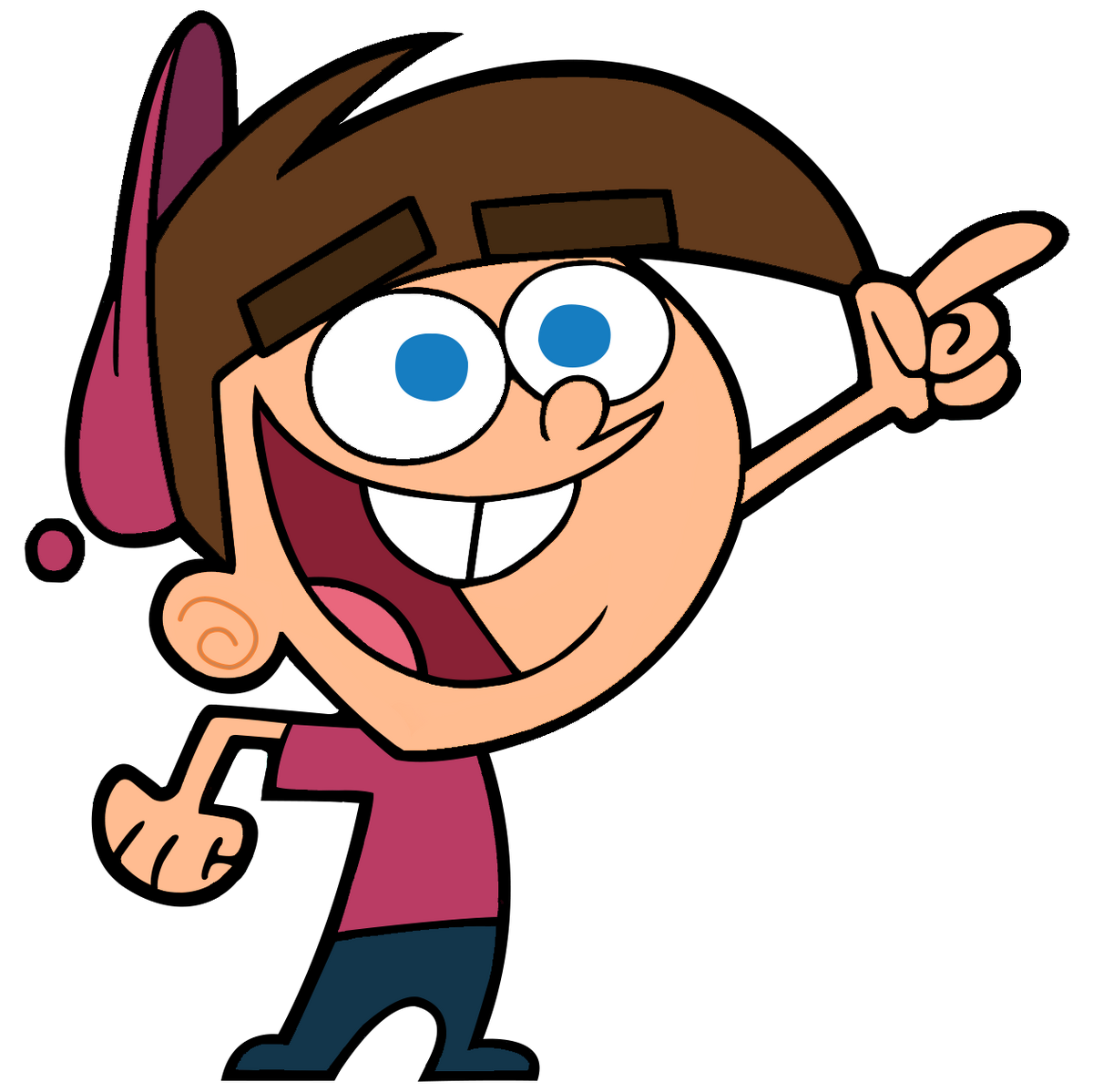
Timmy Turner is basically the patron saint of the "unlucky kid" trope. You know the drill. Ten years old, buck teeth, a pink hat that was only supposed to be pink because a marker ran out of ink—honestly, the most relatable origin story ever. For over two decades, Timmy Turner Fairly OddParents has been a staple of Nickelodeon’s lineup, surviving multiple reboots, a questionable live-action phase, and more "Internet?" excuses than any child should reasonably get away with.
But why are we still talking about him?
It’s not just about the magic. It’s about the fact that Timmy Turner is kind of a mess, and that’s why we love him. He’s impulsive. He’s selfish. He’s occasionally a total brat. Yet, he’s the "average kid that no one understands," and that hook hits just as hard today as it did when the first shorts aired on Oh Yeah! Cartoons back in 1998.
The Secret History of the Pink Hat
Most people think Timmy’s pink gear was a stylistic choice to make him stand out against the suburban drabness of Dimmsdale. It wasn't. Butch Hartman, the show’s creator, has famously admitted that he originally wanted Timmy’s hat to be blue. But as fate would have it, his blue marker was bone dry. He grabbed a pink one instead, and an icon was born.
There’s a weird sort of brilliance in that accident.
In the show's lore, the hat actually has a much darker, or at least more neglectful, backstory. His parents, Mr. and Mrs. Turner (who were so unimportant early on they didn't even have first names or faces), were so sure they were having a girl that they bought a lifetime supply of pink clothes. When Timmy arrived, they just... kept the clothes. It’s a perfect microcosm of why Timmy needed fairies in the first place: his parents are remarkably oblivious.
The Voice Behind the Twerp
Did you know Tara Strong wasn't the original Timmy?
In those early Oh Yeah! Cartoons shorts, the late Mary Kay Bergman provided the voice. She brought a specific kind of gravelly, youthful energy to the role. After her tragic passing, Tara Strong took over and turned Timmy into the fast-talking, high-pitched protagonist we recognize today. Strong’s performance is legendary—she managed to make a kid who constantly causes near-apocalyptic disasters sound sympathetic.
What Most People Get Wrong About Timmy’s Age
If you’ve ever sat down and actually done the math, Timmy should be well into his 30s by now. He was born on March 21, 1992. (Happy 34th birthday, Timmy).
Yet, for 10 seasons, he stayed ten.
Fans spent years theorizing about why he never grew up. Was it just "cartoon logic"? Nope. The show eventually dropped a massive bombshell in the "Timmy’s Secret Wish" special. It turns out Timmy made a secret wish to stop time for everyone in the world just so he wouldn't have to lose Cosmo and Wanda. Think about that for a second. That’s dark. He basically held the entire planet hostage in a temporal loop because he was afraid of growing up.
- The Loop: Everyone stopped aging for 50 years.
- The Erasure: Timmy made the fairies forget the wish so they wouldn't feel guilty.
- The Consequence: When the Fairy Council found out, it almost led to the ultimate "Da Rules" violation.
This revelation changed how a lot of us view Timmy. He isn't just a victim of Vicky’s babysitting torture; he’s a kid with a god complex who is terrified of being alone.
The Problem with Season 10 (And Beyond)
If you talk to any hardcore fan of Timmy Turner Fairly OddParents, they’ll likely groan when you mention the later seasons.
The show went through a lot of changes. First, they added Poof (the baby fairy). Then they added Sparky (the fairy dog). Then came Chloe Carmichael, the "perfect" neighbor who had to share Timmy's fairies because of a fairy shortage.
Honestly? It felt crowded.
Many viewers felt Timmy’s character was "flanderized"—a fancy way of saying he became a caricature of himself. He went from being a clever kid who used magic to solve relatable problems to someone who was just loud and mean for the sake of a gag. The stakes felt lower because the magic became a chaotic "deus ex machina" rather than a tool for character growth.
The 2026 Perspective: A New Wish
In 2024, the franchise took a massive gamble with The Fairly OddParents: A New Wish. This wasn't another live-action Drake Bell movie (thankfully). It was a CGI reboot that actually acknowledged the passage of time.
We finally see Timmy as an adult. He’s out of the house. He’s moved on. And while he isn't the main character anymore—that's Hazel Wells now—his legacy hangs over the show. It’s a bit bittersweet, sort of like seeing an old friend from high school who finally got their life together.
Why Timmy Still Ranks in the Animation Hall of Fame
Timmy Turner works because he represents the "inner id" of every kid.
Who hasn't wanted to wish away a math test? Who hasn't wanted to travel inside their favorite TV show (Channel Chasers is still the goat of TV movies, don't @ me)? But the show always circled back to the same lesson: magic doesn't fix your problems; it usually just makes them weirder.
Timmy usually has to "un-wish" his way out of trouble. He has to use his own brain—and occasionally the help of AJ and Chester—to fix the mess he made. That’s the real heart of the show. The fairies are just the catalyst for him to realize he’s actually pretty capable on his own.
Key Takeaways for Fans
If you're revisiting the series or introducing it to someone new, keep these specific points in mind:
- Watch the crossovers. The Jimmy Timmy Power Hour remains one of the best technical achievements in 2000s animation. Watching 2D Timmy turn into a 3D "blob" in Jimmy’s world was a core memory for an entire generation.
- The "Internet" Gag. Pay attention to how Timmy explains his magical items to adults. His go-to line, "Uh... Internet?", was a subtle jab at how little adults in the 2000s understood the burgeoning digital world.
- Crocker's Obsession. Denzel Crocker isn't just a villain; he's a cautionary tale. He’s what happens when a "wishing kid" loses his fairies and can’t let go. It adds a layer of tragedy to his "FAIRY GOD-PARENTS!" outbursts.
Actionable Insights for the Modern Viewer
If you want to dive back into the world of Dimmsdale, don't just binge-watch randomly. The quality varies wildly between the early golden era and the later "Nicktoons" years.
Start with the "Big Three" specials: Abra-Catastrophe!, Channel Chasers, and School's Out!: The Musical. These represent the peak of the show's storytelling, blending actual stakes with the trademark frantic humor.
Look for the "Easter Eggs": Butch Hartman loved putting references to his other shows, like Danny Phantom, in the background of Timmy’s world. In 2026, with the benefit of high-definition streaming, these details are easier to spot than ever.
Acknowledge the evolution: While the live-action era was divisive, it's worth a watch just to see how the industry struggled to translate 2D "squash and stretch" animation into real-world physics. It’s a fascinating, if occasionally cringeworthy, piece of television history.
Timmy Turner might be an average kid, but his impact on animation was anything but. Whether he's fighting off a "Crimson Chin" villain or just trying to survive Vicky’s "Icky" singing, he remains a definitive part of the childhood experience. He taught us that having everything you want is usually a disaster—and that sometimes, a pink hat is all the identity you really need.
To get the most out of your rewatch, start with the original pilot shorts to see just how much the character's design and voice shifted before the series officially took off on Nickelodeon.