Let’s be real. South Park has done some genuinely unhinged things over the last few decades. We’ve seen characters die, literal gods get mocked, and more social commentary than a sociology textbook. But if you ask a hardcore fan about the peak of the show's mid-series absurdity, they aren't going to talk about the imaginationland trilogy or the giant satire arcs. They’re going to talk about Butters Stotch pretending to be a girl named Marjorine.
The South Park Marjorine episode, officially titled "Marjorine" (Season 9, Episode 9), is a fever dream. It’s a perfect storm of the boys' idiocy and Butters’ endless, tragic innocence.
It starts with a paper fortune teller. You know the ones. You pick a color, you count to ten, and you find out if you’re going to marry a billionaire or live in a dumpster. To the boys of South Park, this isn't a playground toy; it’s a high-tech device used by the girls to predict the future with 100% accuracy.
They need it. They have to have it.
So, naturally, the only logical solution is to fake Butters’ death and send him undercover as a new girl in school. It’s classic Trey Parker and Matt Stone logic. They take a tiny, mundane aspect of childhood and escalate it into a high-stakes espionage thriller that somehow ends with a reference to Stephen King’s Pet Sematary.
The Bizarre Logic of the South Park Marjorine Episode
Most shows would have the kids just try to steal the fortune teller. Not South Park. The commitment to the bit is what makes this episode legendary. The boys don't just ask Butters to wear a wig; they orchestrate a full-blown suicide hoax.
Poor Butters.
He’s always the sacrificial lamb. He stands on top of a building, throws a pig carcass (wearing his clothes) onto the pavement, and then goes home to "transform." The scene where Butters’ parents are grieving over what they think is their son’s mangled body—while Butters is just in the basement putting on a dress—is the kind of dark humor that defined the show's golden era.
He becomes Marjorine.
She’s a "new girl" from a town called "Los (something)." The name is iconic. It’s one of those South Park details that sticks in your brain forever. If you’ve ever seen a fan at a convention wearing a blonde wig and a pink dress, you know exactly what they’re referencing.
Why the undercover mission fails (and succeeds)
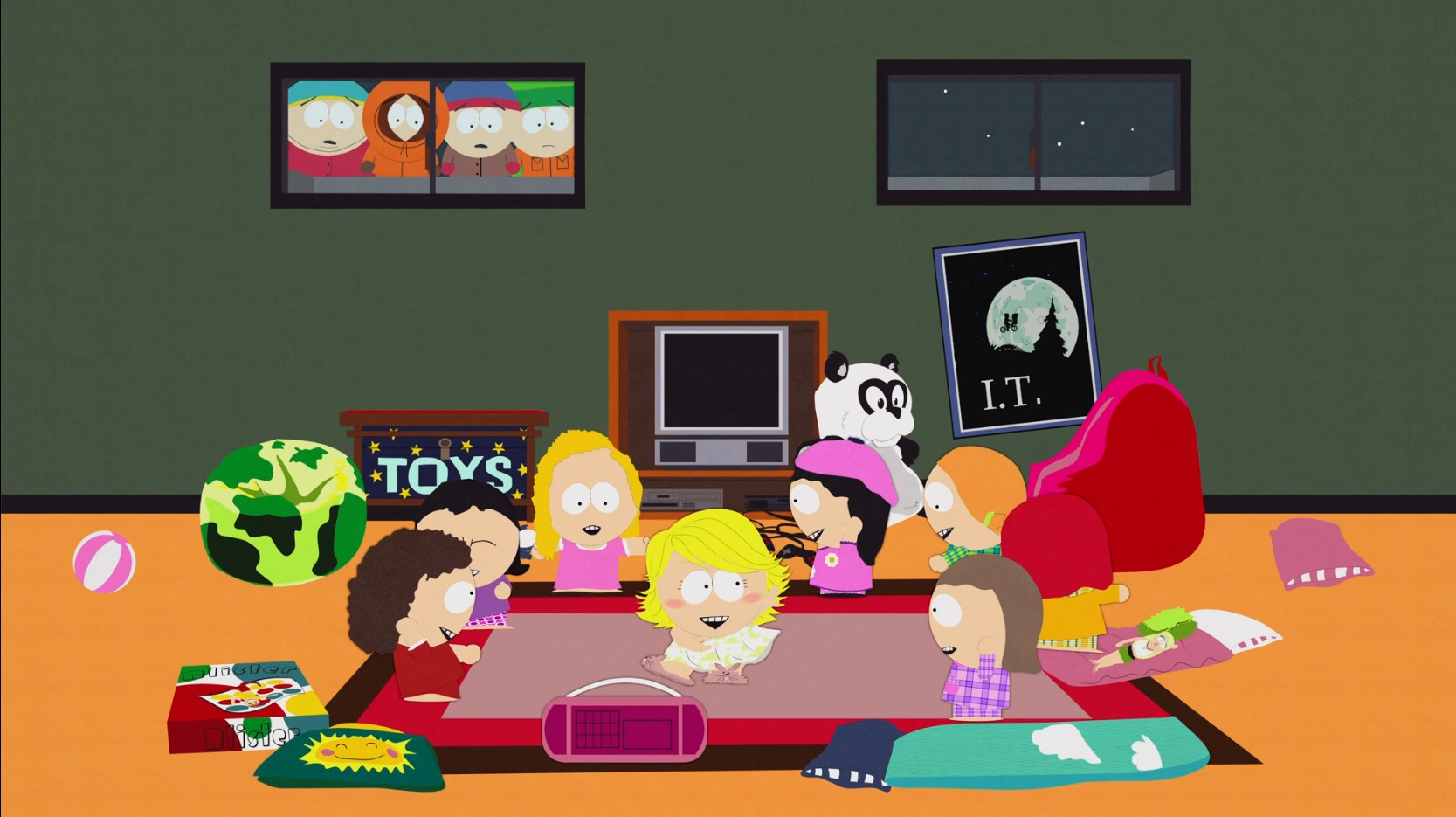
The goal was simple: get invited to a sleepover, find the "device," and get out.
But Butters is Butters.
He’s terrified. He’s awkward. He’s actually kind of sweet. When Marjorine gets bullied by the other girls—specifically Wendy and Bebe—the episode shifts from a heist movie parody to a surprisingly cutting look at how cruel middle-school girls can be to one another. You actually start to feel for Marjorine. Even though she’s just a boy in a wig who thinks girls have magical future-seeing powers, the social isolation is palpable.
Then comes the twist.
Heidi’s dad shows up. This is where things get "kinda" uncomfortable, even by South Park standards. He sees Marjorine crying and tries to be "supportive," but in that weird, overly intense way that only South Park parents can manage. It’s a masterclass in cringe comedy.
The "Pet Sematary" Parody Nobody Expected
While Butters is navigating the treacherous waters of a girls' slumber party, his parents, Stephen and Linda Stotch, are losing their minds. This is the B-plot that elevates the South Park Marjorine episode from a funny premise to an all-time great.
Stephen Stotch becomes convinced that he can bring his son back to life.
How?
By burying his remains (which, remember, is actually a pig) in the "ancient Indian burial ground" behind the local hardware store. It’s a direct, beat-for-beat parody of Pet Sematary. The old man who warns Stephen about the ground—"Sometimes, dead is better"—is a pitch-perfect recreation of Jud Crandall.
It’s hilarious because of the stakes.
The audience knows Butters is fine. We know he’s just across town trying to figure out how to use a paper fortune teller. But Stephen is out there in the dark, digging a hole, genuinely believing he’s committing a soul-crushing sin to resurrect his child. The tonal whiplash between the girls dancing to pop music and Stephen Stotch sobbing in a graveyard is brilliant.
When "Marjorine" finally returns home to tell his parents he’s alive, the payoff is one of the darkest endings in the show’s history. They don't celebrate. They don't hug him. They’re absolutely terrified. To them, Butters isn't their son; he’s a "demon" brought back by the cursed earth.
They lock him in the basement and kill a salesman to feed him.
Seriously.
They just chain him up and toss him a raw steak. It’s a bleak, hilarious, and totally unexpected conclusion to a story that started with a paper toy.
Why This Episode Matters in 2026
You might wonder why we’re still talking about an episode from 2005.
It’s because the South Park Marjorine episode captures a specific type of childhood mythology. Every kid had that one thing they believed was "magic." Whether it was a rumor about a secret character in a video game or the "true" power of a fortune teller, kids live in a world of mystery.
Trey and Matt understood that.
They took that innocent belief and filtered it through the lens of adult paranoia and horror tropes. It’s also one of the best "Butters episodes." Butters is the heart of South Park precisely because he is the only character who truly believes in the nonsense the other boys cook up. Stan and Kyle are often too cynical. Cartman is too evil. But Butters? Butters will literally fake his own death and change his identity just because he wants to help his friends.
Key Takeaways from the Marjorine Saga
- The Gender Satire: The episode mocks the "mystique" boys attribute to girls, showing that the "secret device" is just paper and the "mysterious rituals" are just sleepovers.
- The Stotch Parents: It solidifies Stephen and Linda Stotch as some of the most hilariously incompetent parents in television history.
- The Horror Element: It proves South Park is at its best when it leans into genre parodies, using lighting and music to mimic 80s horror films perfectly.
Navigating the South Park Archives
If you’re looking to rewatch this or share it with a friend, there are a few things to keep in mind. First, don't expect a lot of political commentary. Unlike modern South Park, which is often a reaction to the week’s news, "Marjorine" is an evergreen story about childhood.
It’s part of a run of episodes in Season 9 that many consider the show's peak.
You’ve got "The Losing Edge" (the baseball one) and "Trapped in the Closet" (the Scientology one) in the same season. It was a time when the show was firing on all cylinders, blending high-concept absurdity with genuine character work.
To get the most out of the experience, watch it back-to-back with "The Death of Eric Cartman." Both episodes deal with the boys' warped perception of reality and death. In "Marjorine," Butters is the "ghost" to his parents; in the Cartman episode, Cartman thinks he’s a literal ghost.
Actionable Insights for Fans and Collectors
If you're a fan of the South Park Marjorine episode, there are a few ways to engage with this specific piece of TV history beyond just streaming it on Max or Paramount+.
- Check the Commentaries: If you can find the Season 9 DVDs or the "Mini-Commentaries" online, listen to Trey and Matt talk about this episode. They often discuss how much they love writing for Butters because his voice is so distinct and his reactions are so pure.
- Look for the Merch: Kidrobot and other vinyl figure companies have released Marjorine figures over the years. They are rare but are considered "grail" items for South Park collectors because the design is so specific.
- The Video Games: If you play The Stick of Truth or The Fractured But Whole, look for Marjorine references. The games are packed with nods to these classic episodes, often hiding Marjorine’s dress or the fortune teller in the background as "junk" items or collectibles.
- DIY the Fortune Teller: Honestly, making a paper fortune teller like the one in the episode is a fun bit of nostalgia. Just don't expect it to tell you the future—or lead to you faking your own death.
Ultimately, Marjorine represents the soul of South Park. It's crude, it's weird, and it's surprisingly smart about how kids see the world. It reminds us that even when the show goes to the darkest places imaginable—like chaining a kid in a basement—it’s all rooted in the ridiculous things we believed when we were ten years old.